

 Simulation model of melting ice fields and glaciers
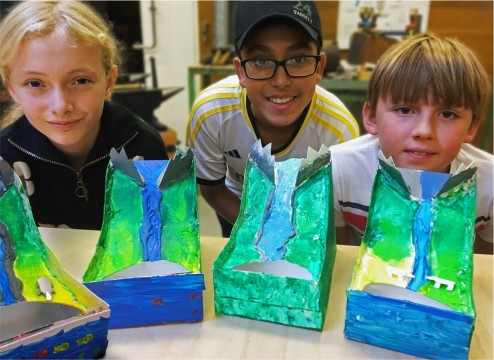
Causes of rising sea levels
One of the consequences of global warming is the rise in sea levels. By 2100, scientists estimate that the water level could rise by an average of 26 to 82 cm (source IPCC). According to these forecasts, entire regions and some islands will be submerged, displacing millions of people ('climate refugees').
The causes of this increase in water volume are mainly due to global warming. This causes the oceans to expand (water takes up more volume when it is heated) and accelerates the melting of land ice (glaciers and polar ice caps), which eventually flows into the oceans.
On the other hand, the melting of sea ice, as dramatic as it is for local species (polar bears, penguins, etc.), does not contribute (or only slightly) to the rise in sea levels. This is because the ice floating on the seas has increased in volume when it solidified. When it melts, it loses the same volume, so there is no (or very little) additional volume of water. This DIY project allows you to experiment with the difference between the melting of land ice and the melting of sea ice.
This DIY project is also an opportunity to emphasise the importance of gradually moving away from fossil fuels and reducing our waste to reduce the production of greenhouse gases that cause global warming. The effects of global warming are not limited to the poles, however, as they are also noticeable
| Date | 18.11.2025 |
| Auteur | Martin |
| Organisme | info-energie |
| Traducteur | Martin |
| Finalité | Autres |
| Domaine | Développement durable Astronomie, météorologie, géographie Autres |
| Langue(s) | français english |
| License |  |
